
"agricultural policy"
400 article(s) found

Severe loss of coffee production caused by drought in Brazil is expected to be reduced by 30%.
According to a report on the website of Brazilian newspaper Le Sao Paulo on November 3, in a plantation in Eloy Mendes (southern state of Minas Gerais), Jean Philippe, a 25-year-old agricultural technician, measured the height of a 2-year-old coffee tree with a ruler. The result is 80 cm, but if Minas Gerais has sufficient rainfall this year, the normal height of the coffee tree should reach 1.3.

Dominican Coffee Flavor Description Grindness Variety Features Taste Boutique Coffee Introduction
Boyer began planting cash crops on the island, reforming taxes and opening it to foreign trade. Although these policies have led to significant increases in Dominican sugar cane and coffee production, they have not been widely accepted by farmers. Boyer considered the liberation of many countries to be a favor he had brought to many people, so Dominicans in the army were often not paid any salary, and many soldiers began to receive
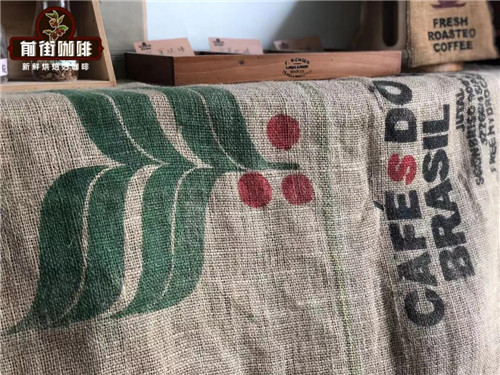
Brazil's coffee export output reached an all-time high of 44.5 million bags in 2020 in advance of the Brazilian coffee production crisis.
For more information on coffee beans, please follow the Coffee Workshop (official Wechat account cafe_style). According to foreign media reports, the European Union and the United Kingdom have held global public consultations on the import of agricultural commodities, a move to force big companies to ensure that deforestation no longer leads to forest degradation. According to the British due diligence on Forest risk Commodities, which ended in early October this year,

Jamaica Silver Mountain Manor Coffee with a strong and elegant aroma
The Jamaica flag was adopted on August 6, 1962. The flag is rectangular and has a ratio of 2:1. [2]There are two diagonal yellow bands on the flag surface, which divide the flag surface into four triangles, green from top to bottom and black from left to right. Yellow represents the country's natural resources and sunshine, black symbolizes overcome and upcoming difficulties, green symbolizes hope and the country's rich agricultural resources

Costa Rican Tarazu La Pira Estate Pila Manor Tibica seed washing treatment
Professional coffee knowledge exchange more coffee bean information please follow the coffee workshop (Wechat official account cafe_style) Costa Rica Tarazu | La Pira Estate Pila Manor Tibika washing method of the flavor? Named after the nickname PIRO of Gilberto Urena, the father of Carlos Carlos, Pilar Manor has a history of 50 years. After inheriting the family farm, Carlos
Coffee planting History of Coffee introduction and expansion in China in the early stage (5)
1. From the first peak period of the development of China's coffee industry (1952-1961) to the late 1940s, according to recorded figures, there are 2173.33 hectares of rubber plantations in Hainan Island, with a total of 867600 rubber trees, with an annual output of 199,000 tons of dry rubber, and more than 300,000 coffee plants. the annual output of coffee beans is 1 ton. According to a survey in the early 1950s, there was a large amount of coffee left in Fushan area of Chengmai County, with a total of 70,000.

On the Management Countermeasures of spice and Beverage Industry
Since 1997, the spice and beverage industry in China has changed its concept, found a correct orientation, faced the market, reformed itself, established a development model of the trinity of scientific research, development and tourism, and organically combined scientific research, development and industry. to achieve a sound development mechanism of promoting and developing according to the needs of the market, relying on the achievements of promotion and development, and relying on industrial management to nurture scientific research. Through reform, fragrant drinks
The History of Coffee introduction and expansion in China in the early stage (5)
1. From the first peak period of the development of China's coffee industry (1952-1961) to the late 1940s, according to recorded figures, there are 2173.33 hectares of rubber plantations in Hainan Island, with a total of 867600 rubber trees, with an annual output of 199,000 tons of dry rubber, and more than 300,000 coffee plants. the annual output of coffee beans is 1 ton. According to a survey in the early 1950s, there was a large amount of coffee left in Fushan area of Chengmai County, with a total of 70,000.

Taiwan Sugar Coffee diplomacy proposes to set up an Office in Honduras
Professional baristas Please follow the Coffee Workshop (Wechat official account cafe_style) Honduras is the fifth largest exporter of coffee beans. Taiwan Sugar announced today that the first batch of imported Hongguo coffee beans will be sold on the Taiwan Sugar Channel by the end of the year, and an office will be set up in Honduras to deepen agricultural exchanges. Taiwan Sugar held a press conference on Honduran Coffee fragrant Treasure Island this morning and announced that it would

Smooth and meticulous Nicaraguan Coffee Flavor taste introduction to the characteristics of boutique coffee in manor area
The Nicaraguan national emblem was launched in 1971. The national emblem consists of three yellow edges symbolizing equality, truth and justice. The five green mountains symbolize Honduras, Guatemala, Nicaragua, El Salvador and Costa Rica, which used to make up the Central American Federation. Blue symbolizes the Pacific Ocean and the Caribbean Sea, which are separated by the Central American isthmus. The yellow on the top of the mountain reflects the volcanic plateau landform of the area. Erect above the green mountain

Lingfeng Coffee Introduction Lincang Lingfeng Coffee Industry Co., Ltd. Lincang Coffee
Lingfeng Coffee Lingfeng Coffee is a coffee brand owned by Lincang Lingfeng Industry (Group) Co., Ltd. Lingfeng Industrial Group is a leading agricultural enterprise in Lincang City to develop coffee industry. In May 2011, a team of 1,000 people from Lingfeng Industrial Group with more than 10 years of experience in agricultural industry joined the coffee industry under the leadership of Yang Zhiqi, Chairman of Lingfeng Industrial Group, and established Lincang Lingfeng Coffee Industry.

Mild flavor of Costa Rica Saint Roman Coffee Manor flavor and taste characteristics of boutique coffee beans
The Supreme Court is the highest judicial body, composed of 22 judges for a term of eight years. At the end of his term of office, he or she may be automatically re-elected if there is no objection from the members of Parliament. There are four courts, the first, second and third tribunals are each composed of five judges, and the fourth court (Constitutional Court) is composed of seven judges and has the final power to interpret the Constitution. The Chief Justice shall be appointed by the Legislative Assembly for a term of eight years and may be re-elected. Highest

Introduction to Santa Barara Manor San Juan Heido
Berries for everyone to popularize what is coffee leaf rust

Laos Coffee brief History of Coffee cultivation in Laos
Coffee cultivation in Laos has a history of about 100 years. It was originally introduced by the French. Coffee cultivation can be divided into four stages: from 1920 to 1940, the French introduced coffee, operated coffee farms, and local farmers gradually began to grow coffee. From 1940 to 1975, affected by external factors such as war and agricultural disasters, farmers mostly abandoned coffee or switched to Robusta. 1975-1990, developing state-owned enterprises

Dominica Coffee Flavor with a faint fragrance introduction to the characteristics of the manor producing area
But nine weeks later, in February 1822, the president of Haiti, Jean-Pierre Bouyer, occupied Spain and Haiti, and once again completed the reunification of the island. After Boyer occupied the eastern Spanish state of Haiti and liberated all the local slaves, Bouyer ordered the confiscation of the land of the white landlords and the complete return of the agricultural land of the whole country. Boyer closed all the universities at the same time, putting 18-2

Costa Rica-Amista La Amistad Manor beans | certified by the North District Agriculture and Food Administration as organic
Professional coffee knowledge exchange more coffee bean information please follow the coffee workshop (Wechat official account cafe_style) Costa-Amista La Amistad manor beans | certified by the North District Agriculture and Food Administration for the flavor of organic raw beans? The coffee produced in Costa Rica is of the most stable quality among Central American countries, because Costa Rican coffee grows in a suitable climate and good shade.

Costa Rican Yersalo Coffee Flavor and taste introduction to the characteristics of boutique coffee beans in the manor area
The Government of Costa Rica has 21 ministries, namely: Ministry of Foreign Affairs and worship, Ministry of the President, Ministry of Internal Affairs, Police and Public Security; Ministry of Finance, Ministry of Foreign Trade, Ministry of economy, Industry and Commerce; Ministry of Planning and Economic Policy; Ministry of Health; Ministry of Science and Technology; Ministry of decentralization and Local Development; Ministry of Social Welfare and Family; Ministry of Public works and Transport; Ministry of Public Education; Housing and Resettlement

Introduction to Santa Barara Manor in Honduras Coffee Manor
Berries for everyone to popularize what is coffee leaf rust

The taste of Costa Rican coffee is mellow. An introduction to the Goddess Manor.
The seven provinces are: Alajuela Alajuela (central, northwest of San Jose), Catago Cartago (central, east of San Jose), Guanacaster Guanacaste (northwest), Eredia Heredia (central, north of San Jose), Limon Limn (east, along the Caribbean), Pentalenas Puntarenas (west, along the Pacific Ocean), San Jose San

Introduction to the description of Manor Flavor of Coffee planting Environment and Variety producing area in Saint Roman Manor, Costa Rica
The research center, located about 30 kilometers northeast of the Costa Rican capital San Jose, belongs to the Costa Rican Coffee Association and is a research institution for villa sarchi planting, breeding and quality inspection newly developed by Costa Rica's national coffee breeds. in addition, it also has 10 hectares of experimental plots, planting a number of excellent varieties. Coffee is the main agricultural product in Costa Rica, with an annual output of more than 2 million bags